Every Intake Reason Has a Story Behind It
In our last post, The Hidden Formula Behind Pet Surrenders, we discussed findings from Austin Pets Alive!’s Positive Alternatives to Shelter Surrender (P.A.S.S.) Program. These findings showed that pet surrender is rarely driven by a single event. Instead, it often results from layered pressures that build over time until a final trigger forces action. While shelter software often categorizes surrender requests by a single reason, the stories behind them reveal a much more complex reality.
Primary Trigger + Secondary Factors + Amplifier = Surrender
Primary Trigger = “What’s wrong?”
Secondary Factors = “What’s making it harder?”
Amplifier = “Why now?”
This pattern emerged through the qualitative findings from 508 Austin Pets Alive’s P.A.S.S. Program cases collected over roughly three months. These findings support the idea that the stories behind these requests often reveal multiple, interconnected circumstances that have been building over time. Surrender is frequently the result of a Primary Trigger, combined with Secondary Factors and ultimately intensified by an Amplifier or external pressure. Together, these elements create a pathway that can lead someone to conclude they can no longer care for their pet.
Without listening to the circumstances that lead community members to seek pet surrender support, we miss the complexity behind the decision.
Why Stories Matter
A pet owner may cite “behavior” as the reason for surrender. Limited financial resources, lack of access to training, transportation barriers, or other life challenges may have made it harder to address the behavior effectively. If only “behavior” is recorded, the owner’s underlying needs and potential areas of support may be overlooked.
It may not be an unwillingness to work through the behavior, but rather a combination of circumstances that reduces a person’s capacity to do so.
From Individual Stories to Patterns
Findings from Human Animal Support Services’ (HASS) Intake Triage Project explored the underlying circumstances driving shelter intake through a people-centered, conversational approach. The project found that understanding why someone seeks assistance requires looking beyond the immediate issue and exploring the broader context of their situation.
By collecting multiple contributing factors rather than relying on a single reason, shelters can get a more accurate picture of the human circumstances leading to intake and better equip themselves to connect people with meaningful support.
Individual stories can reveal even larger patterns in the data. Moving beyond collecting a single reason and instead capturing multiple contributing factors through shelter software, alongside storytelling and a conversational approach, can help unlock a deeper understanding of pet surrender in your community.
Giving your community members a space to tell their story, while also collecting the multiple components of that story, can help shelters better understand both the individual case in front of them and the patterns that emerge across multiple cases over time. When patterns emerge, opportunities for programs develop.
What This Means for Shelter Interventions
Listening isn’t just about gathering better information. It is part of the intervention itself.
As shelters gather more context and analyze it over time, they can begin to shift from asking “what programs do we need” to asking, “what is our community telling us they need?”
That shift can help shelters develop more targeted and sustainable approaches, including:
- Collecting better intake reasons
- Improving intake conversations
- Collecting multiple contributing factors
- Identifying opportunities for intervention before shelter intake
- Identifying existing resource gaps
- Creating referral partnerships with human-service organizations
- Developing or adapting owner-support programs based on community needs
What This Means Beyond the Shelter
Traditional animal shelters and animal services agencies have often operated in isolation, separated from larger community conversations about human and environmental well-being. When we consider animal shelters through a One Health framework, animal health is connected to people’s health and the health of our environment.
In other words, to address the root causes of animal welfare issues, we need to connect with organizations and systems outside the animal welfare field.
From Multi-Layered Problems to Multi-Layered Solutions
Arguably, one of the most significant insights is the need to rethink the conventional shelter response. Shelters have typically operated with a one-step response: intake.
But what if the response could be just as layered as the challenges they are trying to address?
Immediate Support + Barrier Reduction + Long-Term Resources = Retention
This shift, however, does not happen in isolation and is not the sole responsibility of the animal shelters. It requires shelters, volunteers, local government, human-service organizations, and other community partners to work together to provide the resources and support people need to keep their pets.
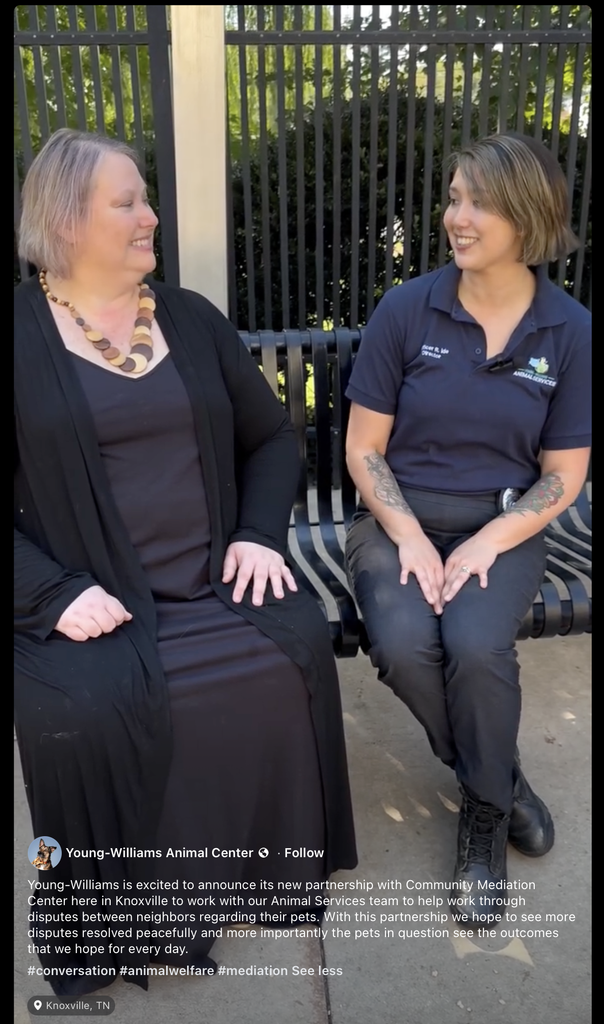
Check out this post from Young-Williams Animal Center, announcing their partnership with the Community Mediation Center in Knoxville, TN!
When the challenges are interconnected, our solutions need to be interconnected, too.
Listen Before We Solve
Before we can build better solutions, we have to understand the problems people are actually experiencing. And sometimes, the best place to start is simply by listening.
Every intake reason has a story behind it. When we take the time to understand that story, we gain more than information about why a pet entered the shelter. We gain insight into what could have helped, what barriers exist in the community, and where there may be opportunities to intervene earlier.
The better we understand the story, the better we can respond.